
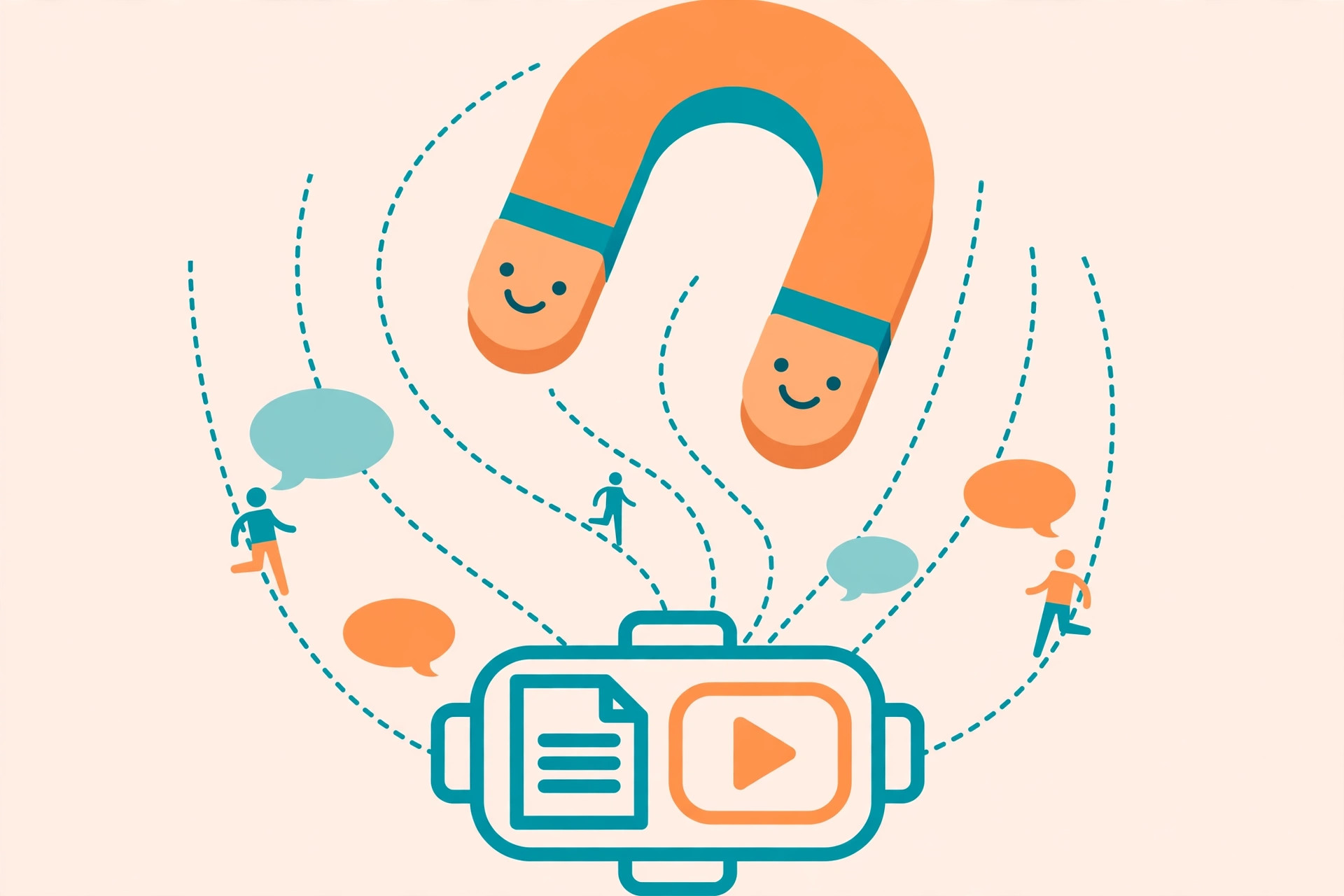
Most marketing shouts. It interrupts your video, fills your inbox, and pops up while you are reading. Inbound marketing does the opposite. It answers the questions people are already asking, and lets them come to you. When someone searches for a fix to their problem and finds your helpful guide, that is inbound marketing at work. This article explains what inbound marketing means, how it works, and how to start using it.
What Is Inbound Marketing?
Inbound marketing is a way of growing a business by creating useful content that pulls people toward you, instead of pushing ads at them. A blog post that solves a problem, a free tool, a how-to video, or a helpful email course — these are all inbound marketing. People find your content when they need it, learn to trust you, and then choose your business when they are ready to buy. The idea was made popular by HubSpot, the company that built its whole business around it, and today it shapes how most serious companies market online. HubSpot’s own inbound marketing page explains the approach in their words.
Inbound vs Outbound Marketing
Outbound marketing is the old way: cold calls, TV ads, banner ads, and bought email lists. The business starts the conversation, and the customer did not ask for it. Inbound marketing flips that around. The customer starts the conversation by searching, and the business is there with an answer. Outbound can still work, but it is getting harder — people skip ads, block calls, and ignore anything that feels like a sales pitch. Inbound meets people where they already are. If you want the wider picture first, our guide on what digital marketing is puts inbound in context.
How Inbound Marketing Works: The 4 Stages
HubSpot describes inbound marketing in four stages. First comes attract: bring the right people to your website with blog posts, videos, and search results that answer their questions. Next is convert: turn visitors into leads by offering something useful in exchange for an email address — a checklist, a free guide, or a short course. Then close: turn leads into customers with helpful emails and offers that arrive at the right time, not a hard sell on day one. Finally, delight: keep customers happy after the sale with useful follow-up content and support, so they come back and tell others. Newer versions of this model talk about a flywheel — attract, engage, delight — but the idea is the same: help first, sell second.
Real Examples of Inbound Marketing
A tax firm publishes a plain-language guide to filing deadlines. Small business owners find it every January, and some of them become clients. A software company offers a free tool that checks a website’s speed. Thousands use it, and a share of them try the paid product. A fitness coach posts short workout videos on YouTube. Viewers trust her advice, then sign up for her paid plan. A garden centre sends a monthly email with seasonal planting tips. Readers open it because it helps, and they buy from the shop it comes from. Notice the pattern: in each case, the marketing is useful before it sells anything. A planned social media marketing strategy is one of the best ways to spread this kind of helpful content.
Why Inbound Marketing Works So Well
People trust a business that taught them something for free. That trust is hard to buy with an ad. A good article can also bring visitors for years, while an ad stops the moment you stop paying. And the leads are better: someone who read your guide before contacting you already understands what you do, so those conversations are shorter and easier. Most of all, inbound fits how people buy now. Buyers research online long before they talk to a salesperson, and inbound marketing is there during that research. Inbound is also easy to measure. You can see exactly which article brought a visitor, which page turned them into a lead, and which email closed the sale. That data shows you what to write more of, and what to stop writing. Outbound rarely gives you that kind of detail, which is why inbound teams usually improve faster year after year.
How to Start Your First Inbound Plan
Start small and stay consistent. First, list the ten questions your customers ask most often. Second, turn each question into one helpful page or video, and answer it properly. Third, make sure Google can find those pages — that means basic SEO on every one. Fourth, offer one useful free download on your best pages, in exchange for an email address. Fifth, send a short, helpful email each week. Sell rarely, help often. A business blog is the natural home for this content, and our guide on how to start a blog for your business walks through the setup.
Frequently Asked Questions
Q: Is inbound marketing the same as content marketing?
A: Content marketing is one part of inbound marketing. Inbound also includes SEO, email, and the steps that turn readers into customers.
Q: How long until inbound marketing works?
A: Expect the first real results in three to six months. It builds slowly, then compounds.
Q: Is inbound marketing expensive?
A: It costs time more than money. A small business can start with a blog and a free email tool.
Q: Do small businesses need inbound marketing?
A: Yes. It is one of the cheapest ways for a small business to compete with bigger rivals, because helpful content can outrank a big ad budget. Moz’s Beginner’s Guide to SEO is a good free starting point for the search side of inbound.
Leave a Reply