
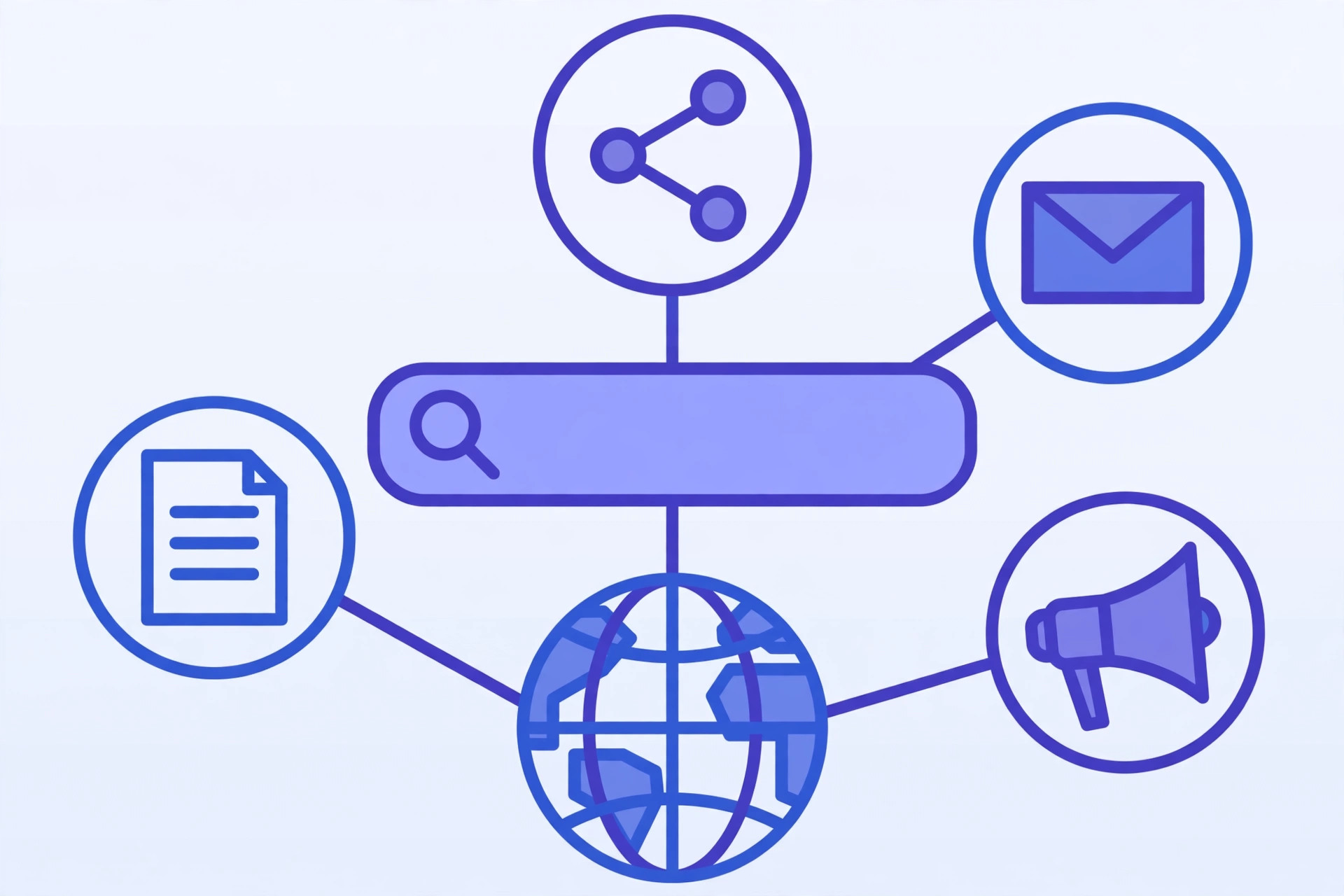
Digital marketing has many parts: social media, email, paid ads, content, and more. SEO is the part that helps people find you on Google. Without it, the rest of your marketing works harder than it needs to. This article explains what SEO in digital marketing means, where it fits, and how to use it with your other channels. For B2B technology companies, the strategy looks different — see our guide to SEO for technology companies.
What Is SEO in Digital Marketing?
SEO in digital marketing means using search engine optimization as one part of a wider marketing plan. SEO itself is the practice of improving a website so it ranks higher in search results. Inside a digital marketing plan, it plays a specific role: it brings in people who are already searching for what you offer. Social media builds awareness. Email keeps customers close. Paid ads buy quick visits. SEO brings steady, free traffic from search — and it makes every other channel stronger, because the pages people land on are better. If you need the wider picture, start with our guide on what digital marketing is.
Where SEO Fits in the Marketing Mix
Think of digital marketing as a team, and each channel has a job. Search, through SEO, catches people who are actively looking. Content marketing gives people a reason to visit and stay. Social media spreads your content and builds a following. Email brings past visitors back. Paid ads buy fast traffic while SEO builds. SEO sits underneath all of them. A blog post shared on social media still needs to rank. An email that links to a landing page works better when that page is clear and fast. SEO improves the pages every other channel sends people to, which is why it belongs in any serious digital marketing strategy.
The Three Parts of SEO
SEO has three parts, and all three matter. On-page SEO is the words on the page, the headings, the title, and how clearly the page answers the search. Off-page SEO is the links and mentions from other websites, which tell Google your page is trusted. Technical SEO is speed, mobile-friendliness, and a structure Google can read easily. A page with great words but a slow, broken site will struggle, and a fast site with thin content will struggle too. Our beginner’s guide on what SEO is explains each part in more detail.
How SEO Works with Other Channels
SEO does not work alone, and it works best when it is planned with the rest of your marketing. Content and SEO go together: every article is a chance to rank for a new search, and content without SEO is a book in a library with no catalogue. Social media and SEO help each other too: social shares do not directly lift rankings, but they bring visitors, and some of those visitors link to you — and links do lift rankings. Email and SEO pair well because an email list brings readers to new pages fast, and early traffic helps Google notice them sooner. And PPC and SEO share data: paid search shows you which phrases actually bring buyers, and you can use that data to choose what to rank for organically.
Why SEO Matters More Than Ever
Search is changing. Google now answers some questions directly on the results page, and AI summaries sit above the links. That makes ranking harder — but also more valuable. The pages that do rank are the ones that give real answers, not thin rewrites. Businesses that invest in genuinely helpful content will keep winning traffic, while thin content fades. SEO is also the channel you own. Social platforms change their rules overnight. An email list can shrink. Your search rankings, built on your own website, are an asset that stays yours. There is another reason SEO matters: it lowers the cost of everything else. When your pages rank, you need fewer paid clicks to get the same traffic. Your social posts land on pages that convert. Your emails link to pages people trust. SEO is the foundation the rest of your marketing stands on, and a weak foundation makes every other channel more expensive. Google’s own SEO Starter Guide is the best place to check what Google itself recommends.
How to Add SEO to Your Digital Marketing Plan
Adding SEO to your plan is straightforward. First, list the searches your customers actually type, and use them to plan your pages. Second, fix the basics on your most important pages: clear titles, fast loading, mobile-friendly. Third, publish one useful page a week, aimed at one search each. Fourth, share every new page on social media and by email. Fifth, check your rankings and traffic once a month, and do more of what works. Good pages also convert better: our guide on what a landing page conversion is shows how to turn that traffic into enquiries.
Frequently Asked Questions
Q: Is SEO part of digital marketing?
A: Yes. SEO is one of the main channels inside digital marketing, alongside social media, email, content, and paid ads.
Q: Can I do digital marketing without SEO?
A: You can, but you will miss the people searching for you right now — and you will pay for every visit instead.
Q: How long does SEO take inside a marketing plan?
A: Three to six months for visible movement, longer for competitive searches. It is the slowest channel to start and the cheapest to keep.
Q: Should small businesses invest in SEO first?
A: For most small businesses, yes. It brings the most durable traffic for the money, and it supports everything else you do. Moz’s Beginner’s Guide to SEO is a solid free read if you want to go deeper.
Leave a Reply