
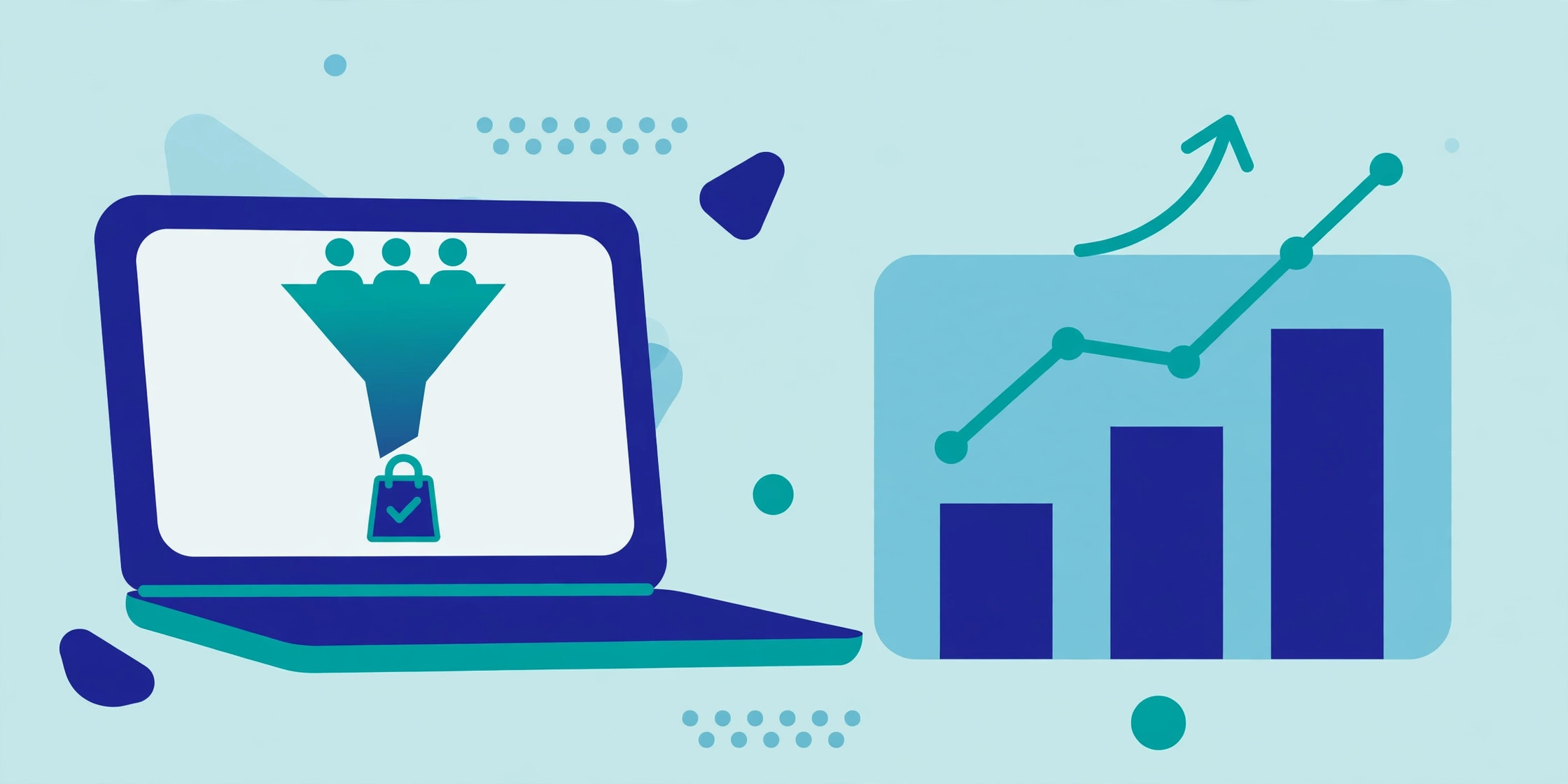
Every day, people land on your pages and leave without doing anything. They read a little, scroll a bit, and close the tab. A landing page conversion is the moment that does not happen — the moment a visitor stops browsing and takes the action you wanted. This guide explains what a landing page conversion is, how to calculate it, what a good rate looks like, and how to get more of them.
What Is a Landing Page Conversion?
A landing page conversion happens when a visitor completes the main goal of a landing page. That goal depends on the page. It can be filling in a contact form, signing up for a free trial, downloading a guide, booking a call, or buying a product.
The important point is simple. A conversion is not a visit, and it is not a click on its own. It is the finished action. If 100 people visit your page and 4 of them fill in the form, you have 4 conversions.
Marketers care about this number because traffic alone does not pay the bills. A page can bring in thousands of visitors and still make no money. What matters is how many of those visitors turn into leads or customers.
How to Calculate Your Landing Page Conversion Rate
The conversion rate is a simple percentage. Here is the formula:
Conversion rate = (number of conversions ÷ number of visitors) × 100
Let us use a real example. Say your landing page had 2,000 visitors last month, and 60 people submitted the form. Your conversion rate is 60 ÷ 2,000 × 100 = 3%.
You can track this in your analytics tool. Most businesses use Google Analytics to watch page traffic and completed goals side by side. Check the rate for each landing page on its own. An average across your whole site hides the pages that need help.
What Is a Good Landing Page Conversion Rate?
There is no single perfect number, because it depends on your industry and your offer. Still, some honest ranges help you judge where you stand:
- Below 2% — the page usually has a problem. The offer, the headline, or the form needs work.
- 2% to 5% — this is the common middle ground for many business landing pages.
- 5% to 10% — a strong page. The message and the offer fit the audience well.
- Above 10% — excellent. This often happens with a very focused page and a free, low-risk offer.
Google also judges the quality of the page people land on. Its guide to landing page experience explains that a helpful, relevant page improves ad results. So a better page helps both your ads and your organic visitors.
7 Simple Ways to Improve Your Landing Page Conversion
1. Make the headline match the promise
If your ad or search result promises a free quote, the headline on the page must say the same thing. When people feel the page is different from what they clicked, they leave in seconds.
2. Keep one clear goal
A landing page should ask for one action. Five buttons pointing to five different places split attention and lower results. Pick the goal and build the page around it.
3. Shorten your form
Every extra field costs you sign-ups. Ask only for what you truly need at this step. Name and email are often enough for a first contact.
4. Add proof near the form
People hesitate before sharing their details. A short testimonial, a review score, or a line like “trusted by 300 local businesses” placed near the button removes doubt.
5. Make the button text specific
“Submit” tells people nothing. “Get My Free Quote” or “Download the Guide” tells them exactly what happens next. Specific buttons get more clicks.
6. Speed up the page
A slow page quietly kills conversions, especially on mobile phones. Compress images, remove heavy extras, and test the page on a real phone, not just your office computer.
7. Test one change at a time
Change the headline, run the page for a set period, and compare the rate. Then test the button or the form. Small, steady tests beat a full redesign based on guesses. If design work is part of the problem, it helps to understand how website design and SEO choices shape the whole page experience.
Common Mistakes That Hurt Conversions
- Sending all traffic to the homepage instead of a focused landing page.
- Writing about your company instead of the visitor’s problem.
- Hiding the form far down the page.
- Using stock phrases that say nothing, like “world-class solutions”.
- Never checking how the page looks on a mobile phone.
Final Thoughts
A landing page conversion is the finished action you designed the page for — a sign-up, a lead, or a sale. Track the rate page by page, compare it with honest ranges, and improve one element at a time. You do not always need more traffic. Often, the faster win is turning more of your current visitors into customers, and a clear page with one goal is how you do it. If you are planning the page itself, our guide on landing page services shows how we approach pages that are built to convert.
Frequently Asked Questions
Is a click the same as a conversion?
No. A click only brings a visitor to the page. A conversion is the completed action on that page, such as a form submission or a purchase.
How often should I check my conversion rate?
Once a week is enough for most small businesses. Check it more often when you launch a new page or change an offer, so you can see the effect quickly.
Can a landing page have more than one conversion type?
It can, but results are usually better with one main goal. If you track a secondary action, count it separately so the numbers stay honest.
Leave a Reply