
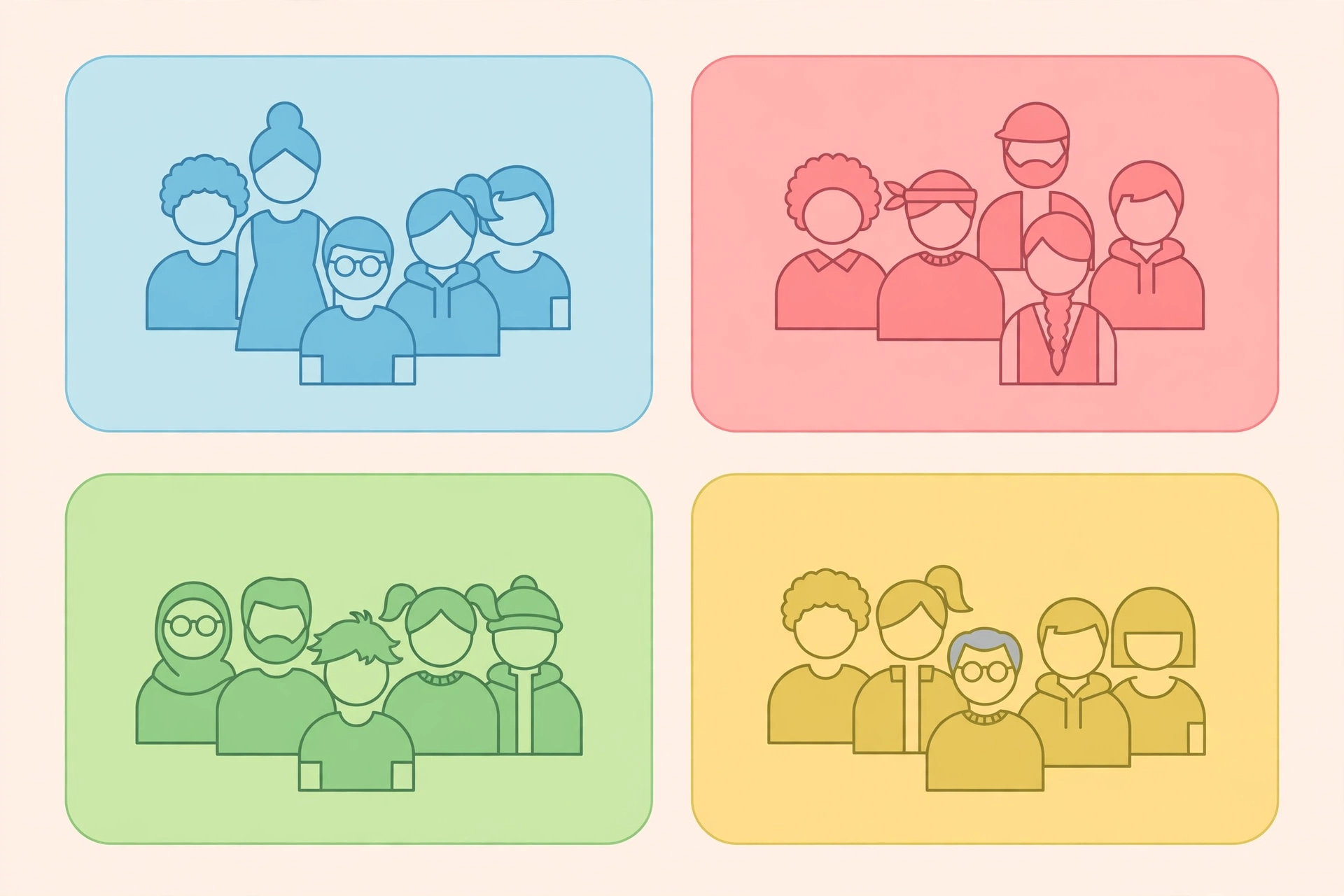
Not every customer wants the same thing. A student buying a laptop cares about price. A video editor cares about speed. A business buyer cares about support and warranty. If you show all three the same message, you will speak clearly to none of them. That is the problem market segmentation solves. Market segmentation is the process of splitting a broad market into smaller groups of people who share similar needs, habits, or traits. Once you know who each group is, you can talk to each one in a way that fits them. This guide explains the four main types of market segmentation, with examples you can use for your own business.
What Is Market Segmentation, in Plain Words
Think of a market as a crowd. Market segmentation is drawing lines through that crowd so people with something in common stand together. You might split them by age, by where they live, by what they earn, or by what they care about. Each group is called a segment. A segment is useful only if you can reach it and if it is big enough to be worth serving. A bakery in one town does not need a segment of “people who like bread in another country.” It needs a segment it can actually sell to, like “busy parents nearby who buy breakfast on the way to school.”
Why Market Segmentation Matters
Marketing without segments is guesswork. You spend the same money on everyone and hope some of it lands. Segmentation makes every part of marketing sharper. Your ads speak to real needs instead of vague benefits. Your product pages answer the exact questions a group asks. Your prices fit what a group can pay. And your content reaches people who are already interested, which is also why it pairs so well with search marketing — if you want the basics first, our guide on What Is SEO? explains how search brings the right visitors to the right pages. Small businesses gain the most from this. You cannot outspend big rivals, but you can out-know them about one small group of customers.
The Four Main Types of Market Segmentation
Most marketers use four types, and the best plans mix more than one.
Demographic segmentation
This splits people by who they are: age, gender, income, education, job, and family size. A toy shop targets parents of young children. A luxury watch brand targets high earners. Demographic data is easy to find, which is why it is the most common starting point. Its weakness is that two people of the same age and income can still want very different things.
Geographic segmentation
This splits people by where they are: country, city, neighbourhood, or climate. A clothing brand sells heavy coats in cold regions and light shirts in warm ones. A local service business targets only the towns it can reach. Geography matters even more for local search — our playbook on local SEO for small businesses shows how to win customers in your own area.
Psychographic segmentation
This splits people by how they live and think: values, interests, lifestyle, and personality. A brand that sells eco-friendly products targets people who care about the planet. A gym targets people who value fitness and routine. Psychographic segments are harder to measure, but they explain why people buy, not just who buys.
Behavioural segmentation
This splits people by what they do: how often they buy, how much they spend, which features they use, and how loyal they are. A shop might treat first-time buyers, repeat buyers, and lapsed buyers very differently. An app might offer a discount to users who have not opened it in a month. Behavioural data comes from your own sales and website, so it is often the most accurate of the four.
Real Examples of Market Segmentation
A coffee chain is a good example. It sells the same beans to everyone, but it segments its marketing. Commuters get a fast mobile-order offer in the morning. Students get a study-friendly afternoon deal. Remote workers get loyalty points for long stays. The product barely changes, but the message changes for each group. Streaming services do the same. They show different shows on the home screen for a family with children and for a single adult who watches documentaries. The segments come from viewing history, which is behavioural data in action.
How to Segment Your Own Market
Start with what you already know. Look at your best customers and ask what they have in common. Then follow four steps. First, list the traits that might matter — age, location, budget, needs, or buying habits. Second, gather data: sales records, website analytics, surveys, and social media insights all help. Third, build two or three segments that are clearly different from each other. If two segments would get the same message, merge them. Fourth, test one message per segment and watch what happens. A digital marketing strategy built around segments like this wastes far less money than one aimed at everyone at once.
Common Mistakes to Avoid
The most common mistake is making too many segments. Ten tiny groups are hard to serve and expensive to reach. Three clear groups beat ten fuzzy ones. Another mistake is segmenting once and never revisiting it. Markets shift — new competitors arrive, prices change, and customer habits move on. Review your segments at least once a year. A third mistake is building segments from guesses instead of data. A hunch is a starting point, not a conclusion. Check it against real numbers before you spend money on it.
Frequently Asked Questions
What is market segmentation in simple terms?
It is splitting a large group of customers into smaller groups that share similar needs, so you can market to each group in a way that fits them.
What are the four types of market segmentation?
Demographic, geographic, psychographic, and behavioural. Most businesses combine two or more of them.
Why is market segmentation important?
It helps you spend your marketing budget on the people most likely to buy, and it makes your messages more relevant, which lifts response rates.
What is an example of market segmentation?
A clothing brand selling winter coats in cold regions and swimwear in warm regions is geographic segmentation. A streaming service showing different content to families and single viewers is behavioural segmentation.
Leave a Reply